


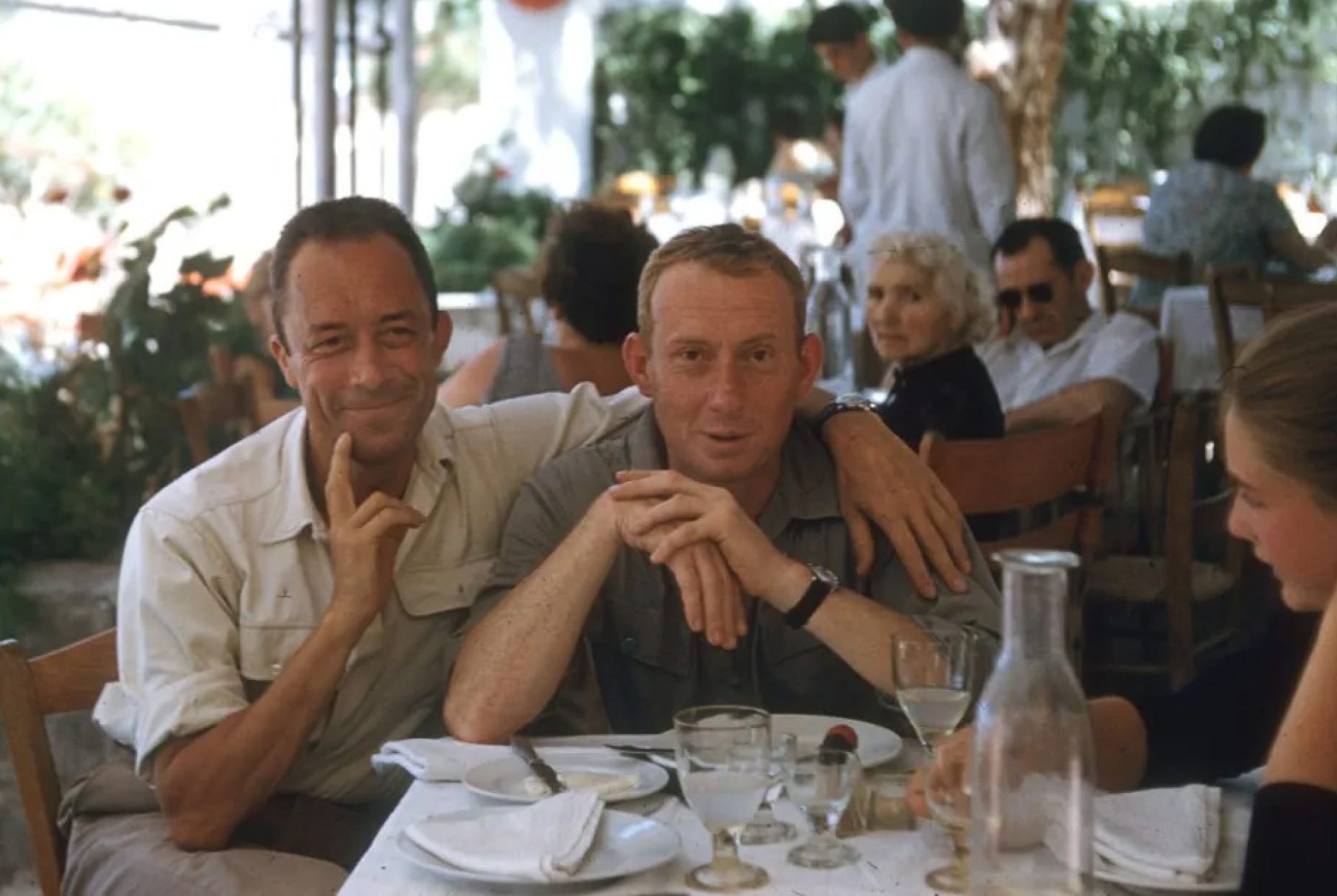
One night in 2016, lying in my bed in my loft in Brooklyn, a word arrived: Present. A few years later, when the first issue came out, one sentence sat above my very first editor’s letter, before any interview or photo:
“Real generosity towards the future lies in giving all to the present.”
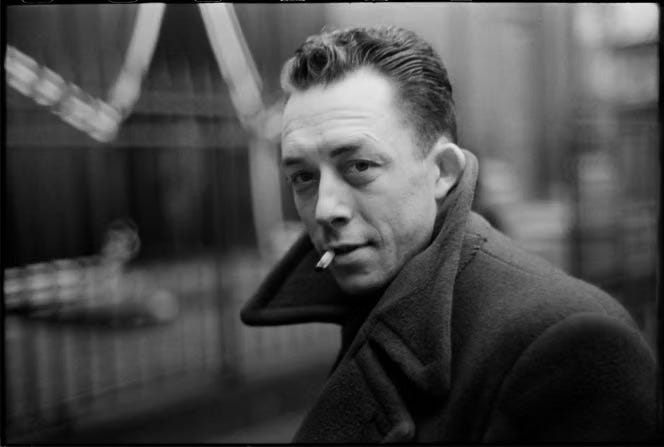
—Albert Camus
Ten years later, PRESENT is a print magazine, a newsletter, a podcast, a community, an app, and soon a book. And the name itself carries a lot of meanings.
To me, it all belongs together. From the outside, I know it can look confusing at times. Maybe I want too much. When people ask what PRESENT actually is, I sometimes catch myself just listing ideas.
This letter is my attempt to bring more clarity. In The Future of Present, I wrote about what we’re building next. This one is about why, and the why starts with that one sentence.
The Urgency
Both of my parents had cancer when I was a teenager. When I was sixteen, my mother gave me a book: No Death, No Fear, by Thich Nhat Hanh. It carried me through the hardest years of my life. Hesse came next, then Camus.
I learned early that life can end early. That knowledge never left me. It gave me an urgency I still feel almost every day.
When you have to watch your mother die at twenty, you start trying to do it all: every idea, every dream, now, while there is time. That drive is her gift to me. The pressure that comes with it, I’m still learning to carry.
I’m not even sure when exactly the Camus sentence found me. But it named something I already felt.
What Camus really meant
For years I read the sentence like a mindfulness quote. Be fully present in the now. Don’t worry about tomorrow.
Then I went back to where it comes from: the last chapter of The Rebel (L'Homme révolté), published in 1951. Europe was in ruins after the war, and many intellectuals were drawn to ideologies that promised a perfect society one day. The price was paid by living people, today: camps, executions, terror, all justified by a bright future.
Camus refused that deal. For him, sacrificing people now for a paradise later was just religion in a new outfit. The book made him a lot of enemies and ended his friendship with Jean-Paul Sartre.
Camus offers a different kind of generosity toward the future. The kind that gives everything it has to life and to the people who are alive right now. And because it holds nothing back now, it ends up being generous to everyone who comes after.
So the future isn’t something you serve by postponing your life for it. The future is made of presents.
His rock is his Thing
This wasn’t theory for Camus. He grew up poor in Belcourt, a working-class neighborhood of Algiers. His father was killed in the First World War before Albert turned one. His mother couldn’t read and was partially deaf. At 17 he was diagnosed with tuberculosis, which ended his dream of becoming a goalkeeper.
He knew early that his time might be short. So the present became the only wealth he trusted: the sun, the sea, his friends, his body.
In his early essays, Nuptials, he writes that he refuses “tous les plus tard du monde”, all the laters of the world, because every later means giving up what he already has now.
A few years later, Camus named his most famous essay after a man from Greek myth who loved life just as much: Sisyphus. He once talked his way out of the underworld for a short visit, saw the sun and the sea again, and refused to go back. So the gods dragged him down and gave him the rock. His crime was loving life too much.
Push the rock up, watch it roll down, start again. Forever. The gods saw it as the worst punishment: useless, hopeless work. Camus disagrees. What interests him is the walk back down, when Sisyphus knows exactly what’s waiting and goes anyway.
“Il faut imaginer Sisyphe heureux.” One must imagine Sisyphus happy. Not because he ever reaches the top, but because he owns his task. “Son rocher est sa chose.”
His rock is his Thing.
Every maker knows this rock. Mine right now is the book. In February I announced it, with a pre-order and a whole newsletter about why I’m writing it. The next morning I wrote in my journal: a bit disappointed there wasn’t more reaction…is anyone even getting my newsletter? A few lines further down, the same morning: But this won’t stop me. The rock always rolls back down. The real question is how you walk back to it. To have the courage to do it anyway.

So, what is PRESENT?
The short version: PRESENT supports Modern Makers doing their Thing, with a magazine, tools and a community.
Every part of it is a way of giving all to the present:
The Magazine gives full attention to how makers really work: the fear, the doubt, the process.
presentOS protects your best hours so you can give them to your Thing. In the app’s Garden, your organism only grows from flow minutes. A future made, literally, of present minutes.
The Consistency Club is about being present with each other, again and again.
Do The Thing says it in its book title: stop postponing yourself. We are all overwhelmed. This is my attempt at creating guidance and a concrete framework.
The Present Principles are me sharing what I learn while I learn it. With this newsletter and my videos.
Together it’s one path: you see how other makers do it in the magazine, you get a framework from the Principles and the book, you practice it every day in presentOS, and in the Club you don’t have to do it alone.

“Just get started.” stays our slogan. It’s three words and a first step. But Camus is the ground it stands on. Just get started is the how. Giving all to the present is the why.
I chose the name PRESENT because its meanings are the pillars of the project. They split right down the middle of Camus’s sentence:
Giving all…
Present as in a gift.
Sharing what we learn, openly and generously. Our work is a gift.
Present as in presenting people.
Giving a stage to makers I admire, the famous ones and the ones you’ve never heard of, with the same seriousness.
Present as in presenting your work.
Having the courage to show what you make to the world.
…to the present.
Present as in now.
The present moment is the only place where anything gets made.
Present as in attention.
Being present with your Thing, with yourself and with the people around you.
Present as in the contemporary.
Being curious about our own time instead of longing for a better past.
Just as clear is what PRESENT is not: hustle porn, faux nostalgia, toxic positivity, hate. When I wrote these down, I noticed: they’re all ways of not being here. Hustle porn lives in the future, faux nostalgia in the past, toxic positivity lies about the now, and hate ruins it for others.
Camus wrote: “I rebel, therefore we exist.” PRESENT was never meant to be guru-style self-help. It’s a we.
The Hardest Thing
To be completely honest with you: PRESENT is the hardest thing I’ve ever done.
It challenges me more than any client project. It constantly pushes me out of my comfort zone. It can be painful, sometimes brutal. It forced me to build a discipline I didn’t have before. It’s my stress. It’s also my baby, my voice, my vision.
In client work, you help bring someone else’s vision to life, and I love that. But I believe it’s important to build your own next to it. That’s hard. That’s good. And it’s what makes me grow.
But being present might be the hardest thing in our world right now. Everything pulls us somewhere else: into a future we're anxious about, a past we’re nostalgic for, a feed full of other people's lives.
Giving all to the present doesn’t mean ignoring all that. Or being blind to history or ignorant of the future. It means choosing, again and again, to give your best hours and your full attention to what or who is in front of you. Your Thing, your people, this day. That’s the most generous thing you can do for whatever comes next.
Stay present,
Hugo
PS: What are you postponing right now, for a future that might never come? And what would it look like to give it everything, today? Comment here or hit reply. I’d love to hear from you.
Become Present Pro
If this letter made PRESENT a little clearer and you’d like to be part of it: Present Pro is the most effective way to support everything I build, the magazine, the app, the community and the writing. The yearly plan includes my book, Do The Thing.
Sources
Albert Camus, The Rebel (L’Homme révolté), 1951, final chapter “Thought at the Meridian”
Albert Camus, Nuptials (Noces), 1938, essay “Le vent à Djémila”
Albert Camus, The Myth of Sisyphus (Le Mythe de Sisyphe), 1942
Ronald Aronson, “Albert Camus,” Stanford Encyclopedia of Philosophy
Maria Popova on The Rebel, The Marginalian
Camus biography: Wikipedia


Really enjoyed this read, thank you!!
🤍