

She Is Always Present
No Death, No Fear: On grief, continuation, and being present with all of it

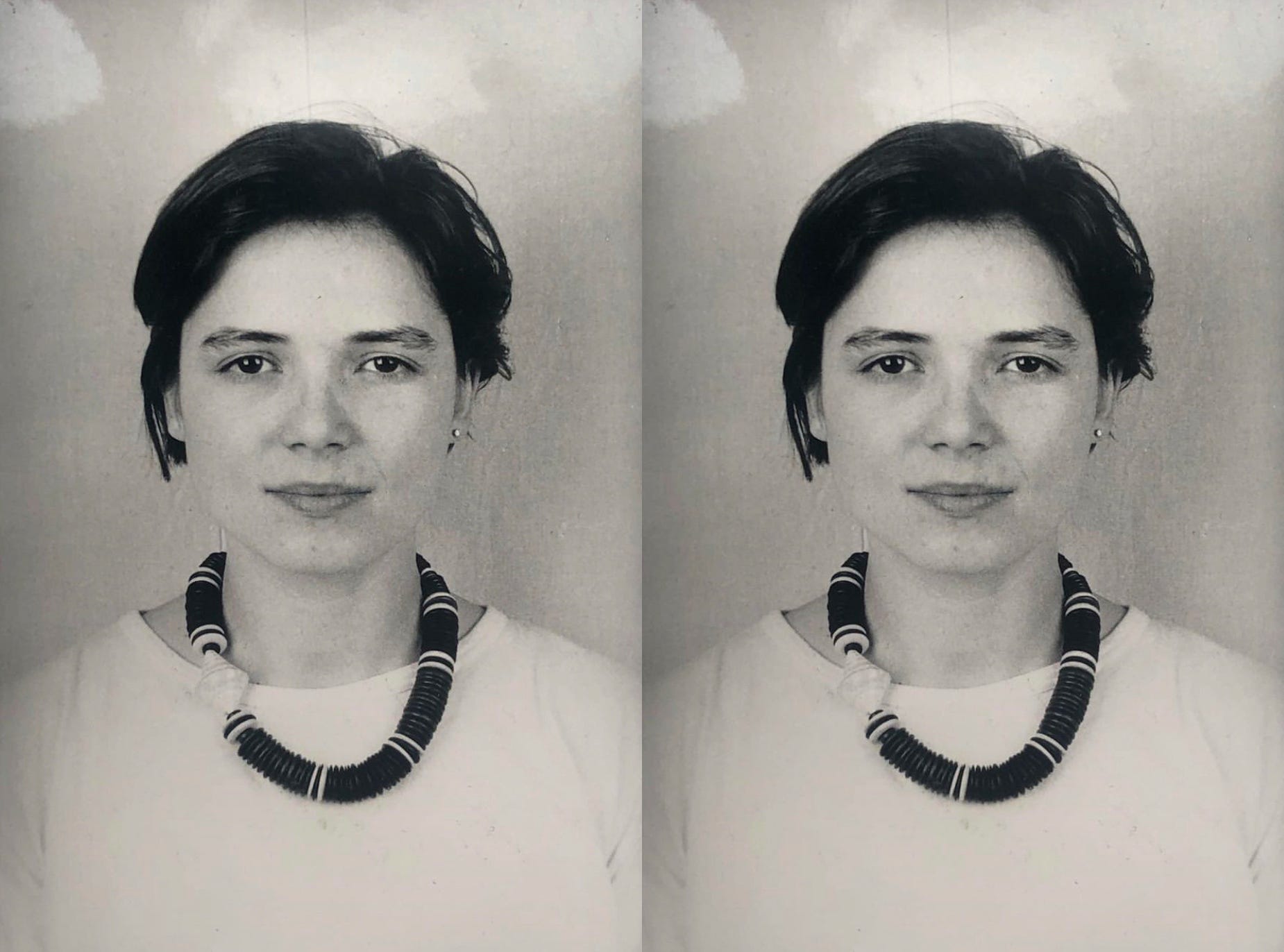
I’m rereading a book this week my mother gave to me when I was sixteen, in the years when both my parents were sick with cancer.
It is the German edition: Kein Werden, kein Vergehen. In English it is called No Death, No Fear, written by the Vietnamese Zen master Thích Nhất Hạnh.
I am reading it again because today is Monday, July 20. On July 20, 2008, my mother died. I was twenty. Her name was Ria Röthinger-Hoppmann.
My mother was a furniture conservator. She ran an atelier in Cologne with her business partner Michaela, and she spent her working life with old, worn, broken things, giving them a future again. Her craft, I only see it now, was continuation. Nothing that landed on her workbench was finished just because it was damaged. And she was the one who introduced me to culture, so much of it that it shaped everything I would later become.
The book helped me through the hardest years of my life. It helped me cope with the sickness of my parents, and later with her death. Reading it is like a hug. It resets me. And it is an inherently optimistic book, which is maybe part of why I turned out such a stubborn optimist myself.
I had to experience how fragile life can be. And how precious it all is. That’s why I want to live life as fully as possible. That’s why I reflect on it so much. And why I fight to be as close as possible to my values, my dreams and my Thing.
Maybe that’s also why I feel the urge to share so much and to do so much. I want to give everything I got.
When my mother was dying, she never looked afraid. She showed no fear and no worry, at least never to us. She kept reassuring us that everything was going to be fine. More than fine. I have never met a stronger woman.
I will not pretend the grief went away. It does not. I still cry sometimes, eighteen years later, and I have stopped expecting that to end. But my grief looked different from the beginning, and for a long time I could not explain why. I learned and accepted that everyone grieves in their own way.
Thích Nhất Hạnh lost his mother too. He writes that he suffered for more than a year, until one night in the highlands of Vietnam he dreamed of her, woke at two in the morning, and stepped outside onto a hillside of tea plants bathed in moonlight. Walking there, he felt her everywhere: in the moonlight, in the earth under his feet. “I understood then that the idea of having lost my mother was just an idea,” he writes. And: “my mother is always alive in me.”
When I read that passage, I recognized it immediately. That is exactly how I felt. It is exactly how I feel today, eighteen years later. My mother is with me. Always. Wherever I am.
Thích Nhất Hạnh had his one night in the moonlight. My version is quieter, and it is not one night. It is all the time.
I have the feeling that what I see, she sees too. When I picture her, she is smiling. Completely relaxed. A calm confidence. She is the voice that encourages me, a guardian angel of sorts, and I think she is proud that I am out here trying to do my Thing, even on the days when it is hard.
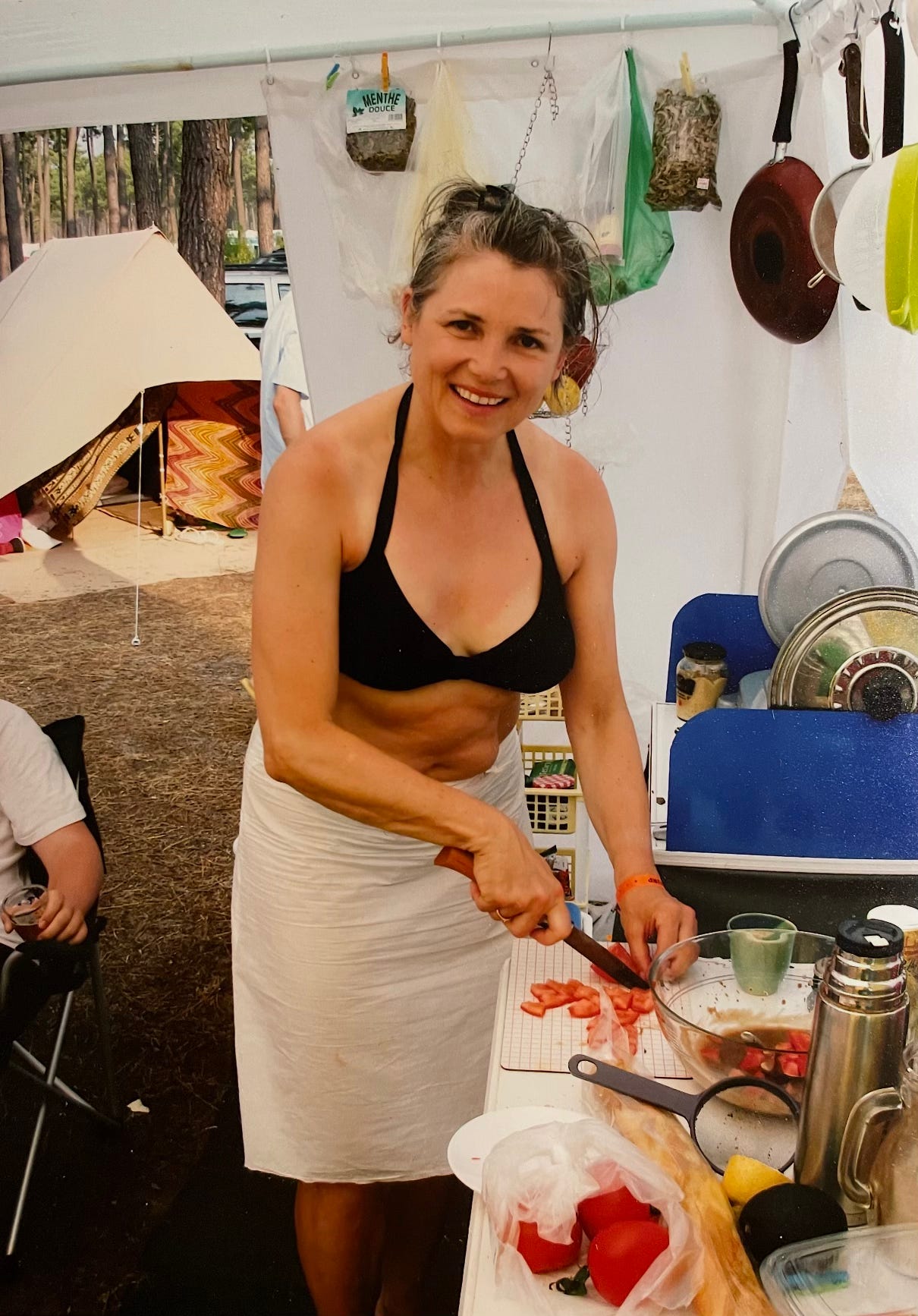
She was a huge fan of France. She loved speaking French, every chance she got. I live in Paris now. She would love that. She would visit us constantly. And she never met Sarah, my partner. I am certain she would have adored her.
Ria shows up on a beautiful summer day. Swimming in the sea. Dinner with friends. The small big things of life. My mother was a connoisseur. She loved good food, good art, good products, good design, good clothes, good people, people with character. She loved the full life. I think what I build today would have made her happy. I am still trying to make her proud.
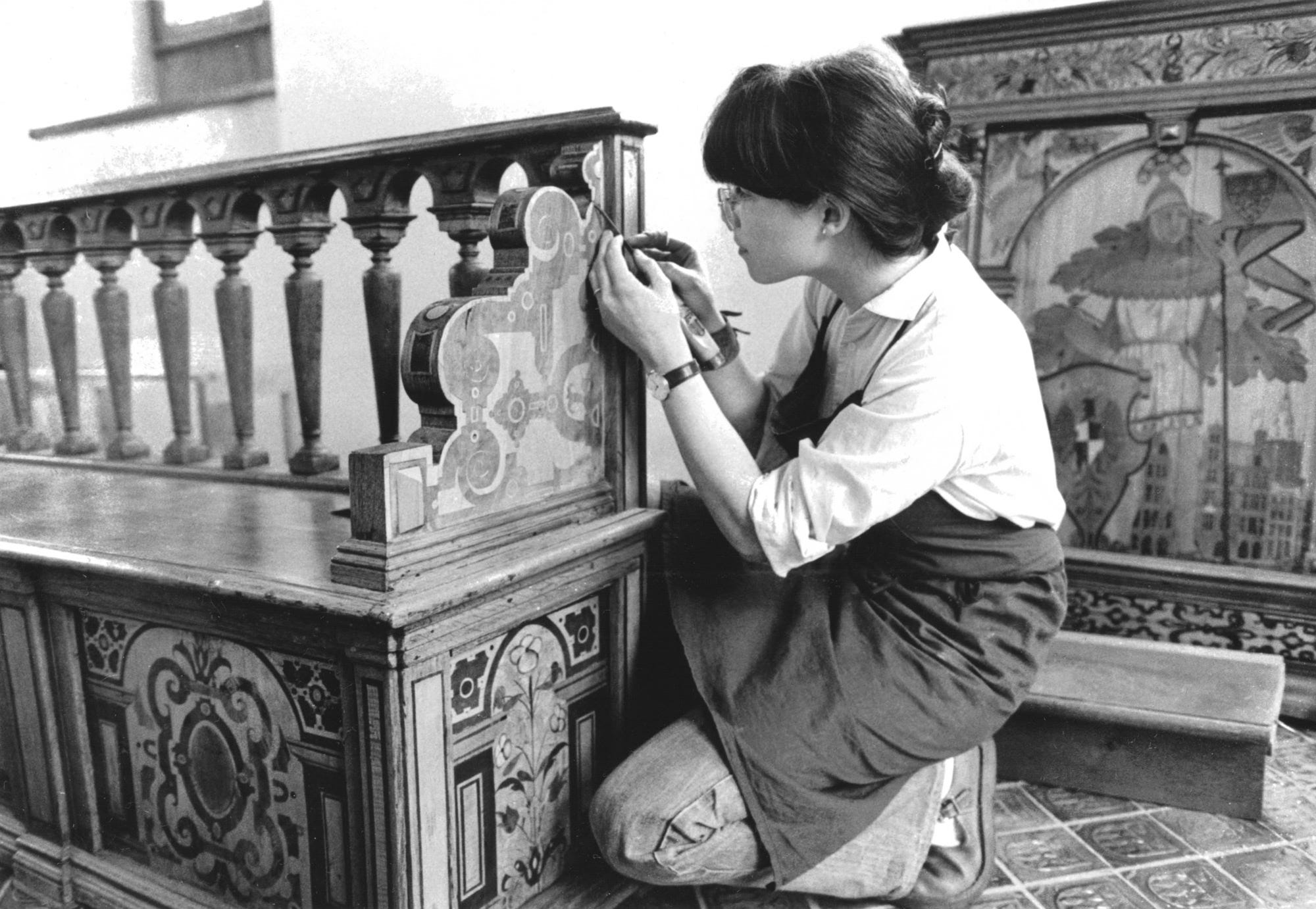
When we printed the first issue in 2019, we put my mother on the cover. The photograph shows her at work on a church bench in her atelier in Cologne, around 1992, when I was a small child. Tool in hand, completely absorbed, not looking at the camera. Present with her Thing. She is on the cover of a magazine she never saw. The patron of everything I make here.
A few weeks ago I was on the phone with John C. Jay. John lost his son Matt two years ago, and he is carrying Matt’s work forward now, growing the artist residency End of Summer his son created. At some point I told him about my mother. John answered with what an old friend of his, a Buddhist monk, had said to him about Matt: “He’s still here. In a different form. He’s not gone.” Then John said: “That’s like your mother.” A generation between us, a son and a mother between us, and this one sentence held it all. I was grateful for John’s words.
Her death made me who I am, more than I usually admit. When you watch your mother die at twenty, you are forced to develop a new perspective on life. And I started trying to do it all. Every idea, every dream, now, while there is time. That drive is her gift to me. The pressure that comes with it, I am still learning to carry. That is its own essay, for another day.
If you have lost someone, and at some point all of us will: your grief does not have to look like anyone else’s. It is allowed to be quiet, loud, slow, strange. It is even allowed to become fuel. Being present was never only about the good days and the flow states. It means being present with all of it, the joy and the grief in the same hand.
I will read Thích Nhất Hạnh’s book again, and again. If you ever need it, it is the closest thing to a hug in book form that I know.
Ria Röthinger-Hoppmann. November 5, 1956 to July 20, 2008. She changed form. But she is always present.
thank you for sharing brother, this means so much to read your experience. love you
thank you